Business Electricity Rates in Texas: A Complete Guide to Commercial Rates
Texas business electricity averaged 8.90¢/kWh in February 2026 (EIA), 38% below the U.S. commercial average. Live TxCP data on 9,088 active commercial plans shows median deregulated supply rates from 6.34¢/kWh in Oncor to 6.63¢/kWh in AEP Texas Central. Here is how rates are built, how delivery costs vary by territory, and what to ask before signing.

Business electricity rates in Texas (also called commercial electricity rates) averaged 8.90¢/kWh in February 2026, roughly 38% below the U.S. commercial average of 14.37¢/kWh, according to the U.S. Energy Information Administration. Rates vary by Transmission and Distribution Utility (TDU) territory, contract type, and demand profile. Most commercial bills break down into five components: energy supply, TDU delivery, ancillary services, demand charges, and regulatory fees.
The SERP for "commercial energy rates" is dominated by aggregators that quote a single ¢/kWh number without explaining how the rate is built. This guide breaks down the structure, walks through how Texas commercial electricity works, and lays out what to ask a Retail Electric Provider (REP) before signing.
Current Commercial Rate Bands by TDU (Live Market Data)
The five deregulated TDU territories in ERCOT show different median commercial supply rates today. These figures reflect the 9,088 active commercial plans tracked in the TxCP dataset as of September 10, 2026, sourced directly from live Retail Electric Provider term sheets and refreshed weekly.
| TDU Territory | Region | Active Plans | Median Rate (¢/kWh) |
|---|---|---|---|
| Oncor | Dallas, Fort Worth, North Texas | 2,169 | 6.34 |
| TNMP | Gulf Coast pockets, West Texas | 1,879 | 6.46 |
| AEP Texas Central | Corpus Christi, Rio Grande Valley | 1,877 | 6.63 |
| CenterPoint Energy | Greater Houston | 1,615 | 6.49 |
| AEP Texas North | Abilene, Wichita Falls area | 1,548 | 6.45 |
Median commercial supply rates now fall in a tight 6.34 to 6.63¢/kWh band across the five deregulated TDU territories, based on 9,088 active plans. Contract length also matters. Longer-term deals (roughly two to three years) tend to price below shorter terms because REPs will trade a rate concession for revenue certainty. You can browse the current commercial plans or see rate spreads across every active Retail Electric Provider.
These figures are aggregate supply rates only. The all-in per-kWh cost a business actually pays adds TDU delivery, ancillary services, demand charges, and regulatory fees on top, which is what the five-component breakdown below covers.
What Are Business Electricity Rates in Texas?
A business electricity rate in Texas (interchangeably called a commercial electricity rate) is the all-in cents-per-kilowatt-hour price a business pays its REP plus pass-through delivery charges from its TDU. Most rate structures separate energy supply from delivery, so the headline ¢/kWh quoted by a REP is rarely the full bill.
The Texas market is deregulated. About 85% of state load is served by 100+ certified Retail Electric Providers competing for customers, with the Public Utility Commission of Texas (PUCT) overseeing the rules. Retail competition launched in January 2002 under Texas Senate Bill 7, and the deregulated zone covers most of the state outside municipal utilities such as Austin Energy and CPS Energy in San Antonio.
Commercial customers pay differently than residential customers. Mid-market and large commercial accounts receive a custom term sheet, not the standardized Electricity Facts Label used for residential. And commercial rates run materially below residential: the EIA reports a Texas residential average of 15.41¢/kWh in February 2026, meaning Texas businesses pay roughly 42% less per kWh than households in the same state.
How Texas Commercial Rates Are Built (Five Components)
Every commercial electricity bill in Texas decomposes into five components: energy supply (the REP's market-driven ¢/kWh), TDU delivery (regulated pass-through), ERCOT ancillary services, demand charges (for demand-metered accounts), and regulatory fees. Use the Five Components framework as the analyst lens for every rate quote. Buyers who understand all five can compare apples to apples and identify which costs are negotiable.
Energy Supply (REP)
Market-driven and quoted in ¢/kWh. This is the line a REP or broker is competing on. Recent commercial supply rates run roughly 5.50¢ to 9.50¢/kWh depending on contract length and load profile. It is the most negotiable component on a contract.
TDU Delivery
The regulated pass-through cost of moving electricity over the wires. Set by PUCT tariff for your specific territory and rate class. Typical commercial delivery runs 1.5 to 3.5¢/kWh. It is non-negotiable, identical regardless of which REP you pick, but verify your REP is quoting the current PUCT-approved tariff.
Ancillary Services
ERCOT-set costs for frequency regulation, operating reserves, and regulation up/down. Most commercial customers see ancillary charges in the 0.5 to 1.5¢/kWh range, sometimes bundled into the supply rate, sometimes itemized.
Demand Charges and 4CP
Demand charges apply only to demand-metered accounts, typically those with peak loads above 50 kW. They are billed in dollars per kW per month based on the customer's peak 15-minute demand. A representative average is around $40 per kW per month, and demand charges can represent 30% to 70% of a commercial bill.
Texas adds a layer most other states do not: ERCOT's 4 Coincident Peak (4CP) program. Each year, ERCOT identifies the single highest grid-wide 15-minute demand interval in each of June, July, August, and September. Whatever your business consumes during those four windows determines your transmission charges for the entire next year.
Regulatory Fees
Riders for the Retail Reliability Payment Program (RRPP), nuclear decommissioning, and miscellaneous PUCT-mandated charges. Combined, these typically add 0.02 to 0.10¢/kWh. Small but always on the bill.
TDU Territory Cost Variation
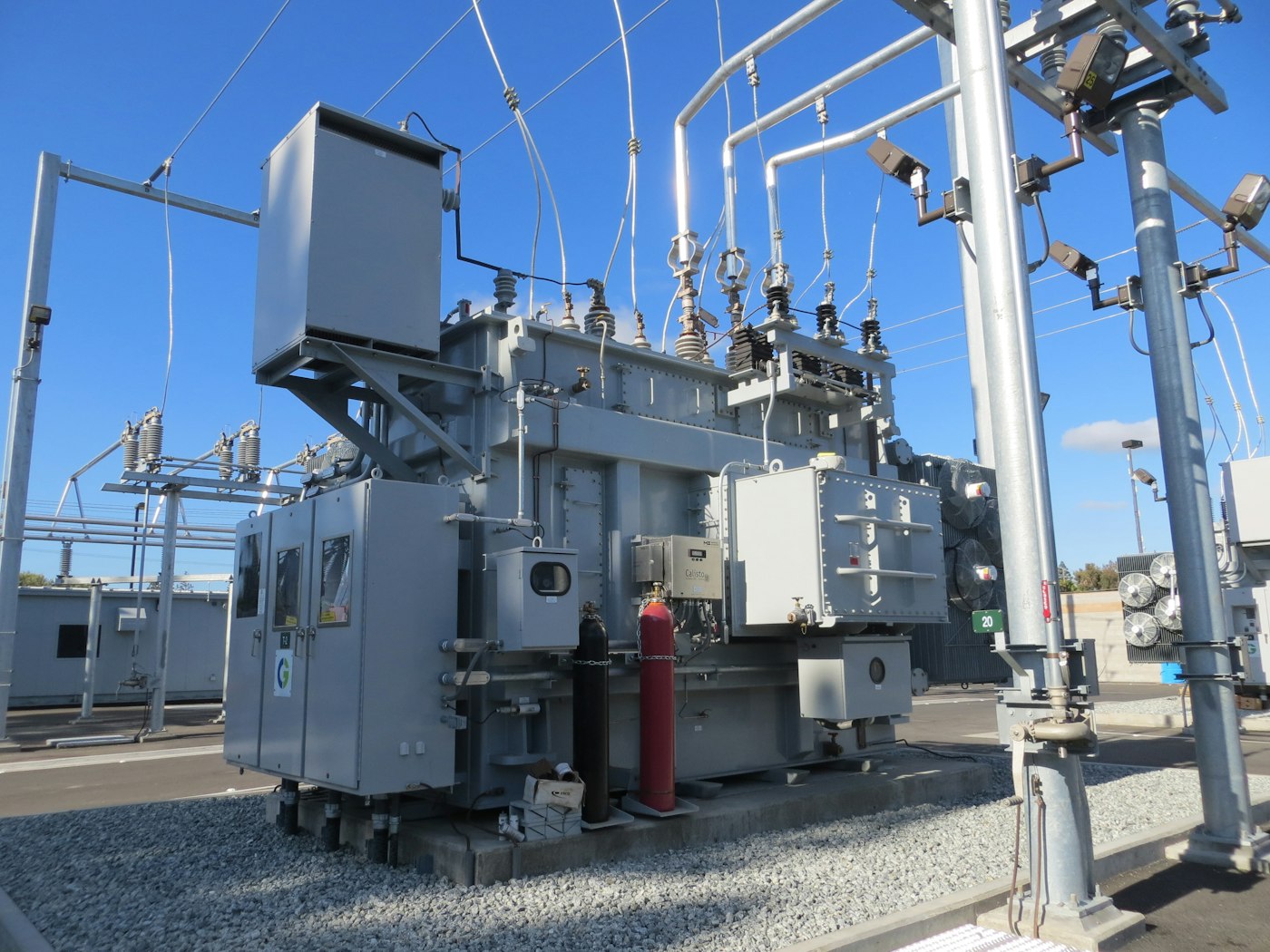
Texas's deregulated market is divided among six TDU territories: Oncor (DFW and North Texas), CenterPoint Energy (Greater Houston), AEP Texas North, AEP Texas Central, TNMP, and Sharyland. Commercial delivery charges run from roughly 2.8¢/kWh in Oncor territory up to 5.5¢/kWh in TNMP, set by PUCT tariff and rate class.
| TDU | Region | Approx. Commercial Delivery (¢/kWh) |
|---|---|---|
| Oncor | Dallas, Fort Worth, North Texas | 2.8 to 4.8 |
| CenterPoint Energy | Greater Houston | 3.2 to 5.0 |
| AEP Texas North | Abilene, Wichita Falls area | 4.2 to 5.0 |
| AEP Texas Central | Corpus Christi, Rio Grande Valley | 4.2 to 5.2 |
| TNMP | Gulf Coast pockets, West Texas | 4.5 to 5.5 |
| Sharyland | Parts of West, South, Central Texas | varies |
Same REP, same supply rate, very different all-in costs. Two businesses in different territories can pay 1.5 to 2¢/kWh more on delivery alone for the same usage profile. Verify your specific territory rate against the current PUCT tariff filing rather than the number on a REP's quote sheet.
Commercial Contract Types in Texas
Texas commercial buyers choose between fixed-rate, variable-rate, indexed (block-and-index), and heat-rate contracts. Fixed-rate plans lock in a ¢/kWh for the term and protect against summer spikes. Variable-rate plans float monthly. Indexed plans blend a fixed block with wholesale ERCOT exposure. Each fits a different risk tolerance and load profile.
Fixed-rate contracts give predictable cash flow and hedge against summer wholesale spikes, in exchange for a premium over current spot. They suit small and mid-market businesses that prioritize budget certainty. Variable-rate plans float month to month and rarely make sense for a serious commercial account because they expose the buyer fully to ERCOT summer volatility. Indexed plans are a middle path: a fixed block of usage at a contract rate, with the balance settled against ERCOT wholesale, useful for mid-market loads with a consistent base. Heat-rate contracts price off natural gas curves or wholesale benchmarks and suit sophisticated buyers running internal hedging.
The macro context matters. ERCOT projects peak demand to grow from roughly 87 GW in 2025 to 145 GW by 2031, a 67% increase, with data centers alone adding around 24 GW of new load by 2031. Grid Strategies notes the forecasted growth rate is roughly 8x the 3.7% rate filed with FERC just a few years ago.
According to Doug Lewin, an energy analyst behind the Texas Energy and Power Newsletter:
"Large load is coming. We don't know what that number is going to be. Some of the numbers that are reported are a little crazy, but don't lose the signal from the noise. We're going to have robust load growth, and that means we are going to need a lot of new energy resources."
That outlook is now priced into the curves REPs use to quote multi-year fixed offers.

What Businesses Should Do
To get a competitive commercial rate in Texas, treat procurement as a defined process: know your usage profile, RFP at least 90 days before contract end, request line-item pricing, validate the TDU pass-through, and review the term sheet for early termination, auto-renewal, and POLR exposure.
- Pull 12 months of interval usage data (kWh and peak kW) from your TDU before requesting quotes. Without it, REPs are guessing at your load profile and pricing in margin to cover the uncertainty.
- RFP 90 to 180 days before contract end. Earlier gives flexibility on the forward curve. Later forces a rushed decision and often a worse rate.
- Demand line-item pricing. Energy supply, TDU pass-through, ancillary, demand, and fees broken out separately. Bundled all-in quotes are intentionally hard to compare.
- Verify the TDU rate against the current PUCT tariff filing for your territory.
- Audit the early termination fee and the auto-renewal clause. Both can quietly erase the savings negotiated on the supply rate.
- Confirm POLR backstop terms. If your REP exits mid-contract, the Provider of Last Resort program places you on default service at unfavorable variable rates until you re-shop.
- Match contract length to your forward outlook. Long fixed terms hedge against ERCOT load growth. Shorter terms preserve flexibility if your business is changing.
You can pull current commercial plan data to benchmark incoming offers against live market quotes before signing.
Questions to Ask Your REP or Broker
A short list of questions surfaces hidden contract terms and signals to the supplier that the buyer understands the market.
- What is the TDU pass-through rate for your specific territory and rate class, and is it the current PUCT-approved tariff?
- Are demand charges and 4CP exposure quoted separately, and how is your peak demand calculated?
- What is the early termination fee, and is it a flat dollar amount or a forward-curve liquidation?
- Is there an auto-renewal clause? At what rate, and how much notice is required to opt out?
- If the REP exits the Texas market or transfers customers to a Provider of Last Resort, what pricing protections apply during the transition?
- Can the broker share a sample bill with all five rate components broken out before signing?
If a broker can't answer those clearly, that is a signal in itself. You can also contact the TxCP team for a second pair of eyes on a term sheet before signing.
Frequently Asked Questions
What is the average cost of commercial electricity per kWh in Texas?
Texas commercial customers paid an average of 8.90¢/kWh in February 2026, according to the U.S. Energy Information Administration. The U.S. commercial average that month was 14.37¢/kWh, which puts Texas roughly 38% below the national average. Live deregulated commercial supply rates tracked in the TxCP dataset on September 10, 2026 show per-TDU medians running from 6.34¢/kWh in Oncor territory to 6.63¢/kWh in AEP Texas Central, across 9,088 active plans.
What are business electricity rates in Texas?
A business electricity rate in Texas (also called a commercial electricity rate) is the all-in cents-per-kilowatt-hour price a business pays its Retail Electric Provider plus the regulated pass-through delivery charges from its Transmission and Distribution Utility. Live TxCP data on September 10, 2026 shows median deregulated supply rates in a tight 6.34 to 6.63¢/kWh band across the five ERCOT TDU territories, across 9,088 active plans.
Why are commercial electricity rates lower than residential rates in Texas?
Commercial customers consume electricity at a flatter, more predictable load profile than residential customers, which is cheaper for the grid to serve. Commercial accounts also pay lower per-kWh transmission allocations, and competition among 100+ Retail Electric Providers in the deregulated market keeps the supply side aggressive.
How are commercial electricity rates calculated in Texas?
Commercial rates are built from five components: energy supply (set by your REP), TDU delivery (set by PUCT tariff for your territory), ERCOT ancillary services, demand charges (on demand-metered accounts), and regulatory fees. Your all-in ¢/kWh is the sum of those components for your specific usage profile.
What is a TDU charge on a Texas commercial bill?
The TDU (Transmission and Distribution Utility) charge is the regulated pass-through cost of moving electricity over the wires from the generator to your business. Texas has six TDUs: Oncor, CenterPoint, AEP Texas North, AEP Texas Central, TNMP, and Sharyland. Charges typically range from 1.5 to 3.5¢/kWh.
When should a Texas business renew its commercial electricity contract?
Issue an RFP 90 to 180 days before the current contract expires. That window gives REPs and brokers enough time to price competing offers against the forward curve. Renewals locked in inside of 30 days often default to higher rollover rates.
Related Coverage
Deeper coverage on specific commercial electricity topics:
- Small Business Electricity Rates in Texas - what to expect on energy line, load factor framework by business category, switch process
- Business Electricity Plans in Texas: How to Switch and Save - six plan structures (fixed, variable, indexed, TOU, demand-response, renewable)
- Power to Choose for Business: Does a Commercial Version Exist? - why no powertochoose commercial site exists and what to use instead
- Fixed vs Variable Rate Plans - the math behind fixed pricing and the five-decision-lever framework
- How to Compare Commercial Electricity Rates - five-line apples-to-apples worksheet with worked example
- Average Commercial Electricity Price Per kWh - EIA-sourced 8.64 cents Jan 2026 and six-year history
- Commercial Electricity Rates in Houston - CenterPoint tariff, active REPs, Docket 51234 grid hardening
- Best Commercial Electricity Rates 2026 - ranked REP rates and the five-factor decision framework
- Retail Electric Provider Texas - every commercial REP compared
- Electricity Rate Comparison Texas ERCOT - RFP process and 5-line normalization worksheet
Hero photo by Daniel Halseth on Unsplash. Substation photo by American Public Power Association on Unsplash. Warehouse photo by DWagonerd on Unsplash.